Cruz Zaragoza Lab cell logo Cruz Zaragoza LabCell Organization
Université de Sherbrooke · Département de biologie

Cruz Zaragoza
Lab

Impact of organelles on cell state and function.

We study how cells organize their interior — how mitochondria, peroxisomes, and the metabolic state they shape drive rare genetic disease, cancer, and aging.
Mitochondria–Peroxisome Crosstalk Mitochondrial RNA Biology Cellular Metabolism Rare Disease
Scroll to explore
About the lab

How organelles shape the state of the cell.

Established in April 2025 at the Département de biologie, Faculté des sciences, Université de Sherbrooke, our group investigates the cellular metabolic state as a key factor in human disease. We combine quantitative cell biology, organelle biochemistry, real-time bioenergetics, and RNA-based tools to understand how mitochondria and peroxisomes communicate — and what happens when that communication fails.

Led by Prof. Luis Daniel Cruz Zaragoza, the lab is built on open, training-first science and a strong commitment to equity, diversity, and inclusion.
Selected work
What we study

Research

Our program is organized around three integrated axes, united by one question: how does the spatial and metabolic organization of the cell determine its fate in health and disease?

AXIS 01

PerMit — mitochondria–peroxisome crosstalk

Inter-organelle communication

Mitochondria and peroxisomes cooperate to control redox balance and lipid metabolism, communicating across membrane contact sites. We dissect the molecular tethers and signals that coordinate these two organelles, and ask how their crosstalk shapes cellular metabolism — and how its disruption contributes to peroxisome biogenesis disorders and mitochondrial dysfunction.

Organelle biology
AXIS 02

Mitochondrial RNA biology & rare disease

MELAS · MERRF · mt-tRNA

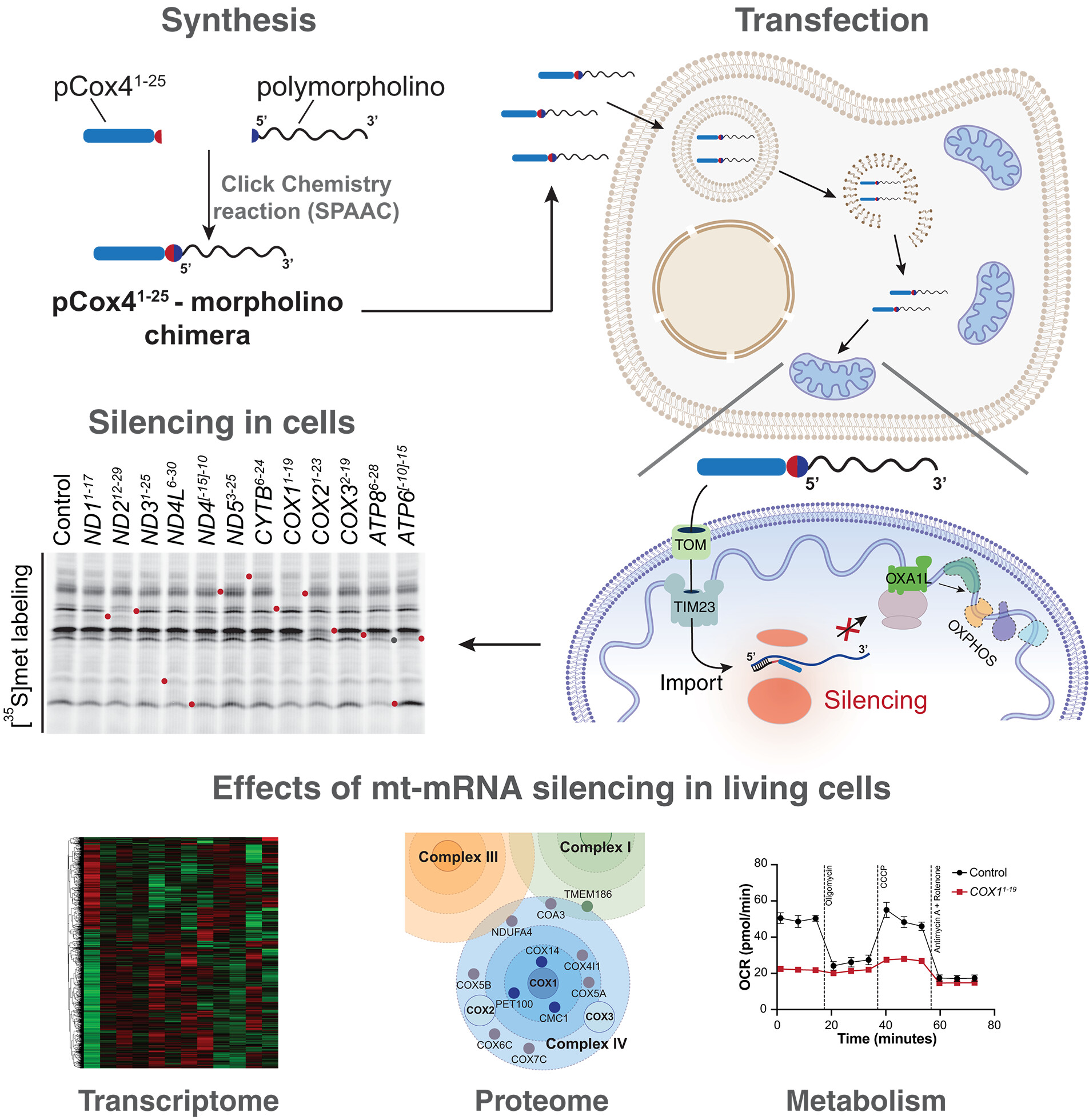
The mitochondrial genome encodes essential subunits of the energy-producing OXPHOS system, yet has long resisted targeted manipulation. Using our toolkit to silence mitochondrial gene expression in living cells, together with patient-derived fibroblasts and iPSC models, we study how pathogenic mt-tRNA mutations disrupt mitochondrial protein synthesis — and develop RNA-based strategies toward future therapies.

RNA · Therapeutics
AXIS 03

Cellular metabolism in cancer & aging

Bioenergetics · LRH-1 · choroid plexus

Metabolic state is a driver, not just a readout, of disease. Anchored by our Cellular Metabolism platform (Seahorse XF Pro), we measure real-time bioenergetics to probe how altered metabolism fuels cancer progression and how organelle decline shapes aging — including work on the choroid plexus and the nuclear receptor LRH-1.

Metabolism

Living-cell silencing

Synthetic peptide–morpholino chimeras that switch off specific mitochondrial mRNAs in living human cells.

Real-time bioenergetics

Seahorse XF Pro flux analysis of OCR, ECAR, and ATP production in cells, organoids, and tissue.

Patient-derived models

Fibroblasts and iPSCs from people living with mitochondrial and peroxisomal disorders.

Organelle biochemistry

Contact-site mapping, proteomics, and imaging of mitochondria–peroxisome communication.

The people

Team

LC

Prof. Luis Daniel Cruz Zaragoza

Principal Investigator

Organelle biology, mitochondrial gene expression, and cellular metabolism in disease. Founded the lab in 2025.

DJ

Dairovys Anner Jiménez Fundora, MSc

Research Assistant

Cell culture, bioenergetics, and day-to-day operation of the Cellular Metabolism platform.

MC

Maxime Comeau-Gauthier

Master's Student

Contributing to the lab's mitochondrial RNA research.

MK

Masoumeh Khademian

Master's Student

Contributing to the lab's organelle-biology and PerMit research.

Join the lab

We are always looking for motivated undergraduate, MSc, PhD, and postdoctoral researchers excited about organelles, metabolism, and rare disease. Get in touch.

Contact the lab →
Highlights

Selected publications

Key work spanning mitochondrial gene expression, mitochondrial protein import, and peroxisome biology.

First authorCo-first authorCorresponding author— author roles are marked on each entry
2025

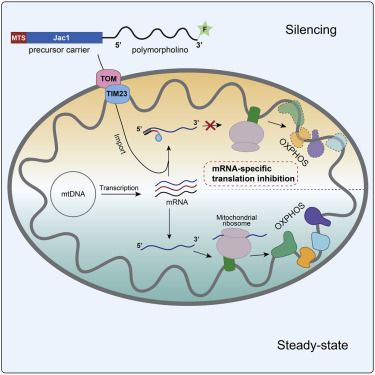
Silencing mitochondrial gene expression in living cells

Cruz-Zaragoza LD, Dahal D, Koschel M, Boshnakovska A, Zheenbekova A, Yilmaz M, Morgenstern M, Dohrke J-N, Bender J, Valpadashi A, Henningfeld KA, Oeljeklaus S, Kremer LS, Breuer M, Urbach O, Dennerlein S, Lidschreiber M, Jakobs S, Warscheid B, and Rehling P.
Sciencedoi ↗
First authorCorresponding author
2023

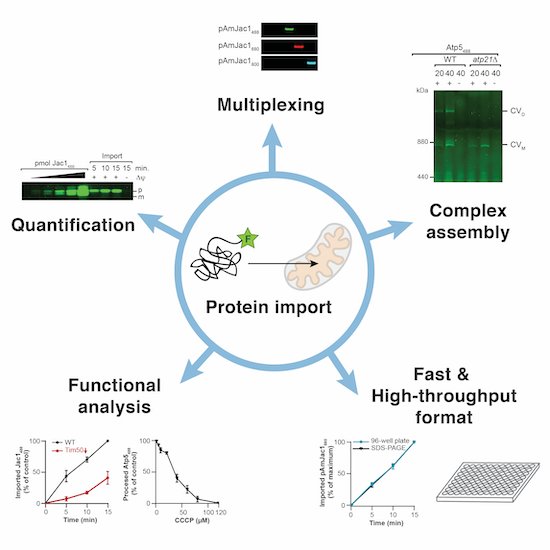
A quantitative fluorescence-based approach to study mitochondrial protein import

Jain N, Gomkale R, Bernhard O, Rehling P, Cruz-Zaragoza LD.
EMBO Reportsdoi ↗
Co-corresponding author
2021

An in vitro system to silence mitochondrial gene expression

Cruz-Zaragoza LD, Dennerlein S, Linden A, Yousefi R, Lavdovskaia E, Aich A, Falk RR, Gomkale R, Schöndorf T, Bohnsack MT, Richter-Dennerlein R, Urlaub H, Rehling P.
Celldoi ↗
First author
2020

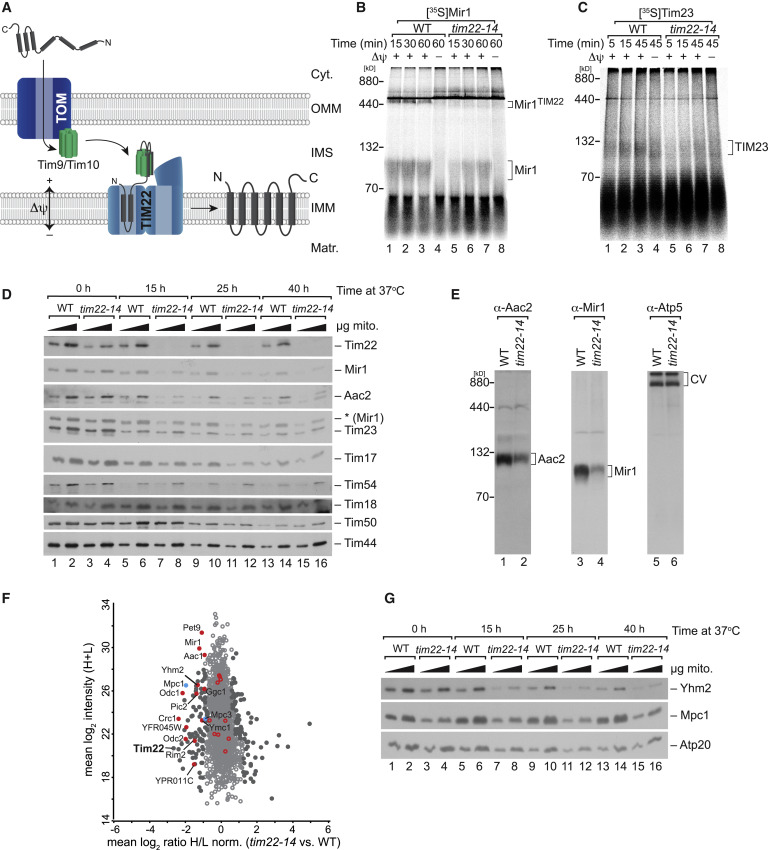
Defining the substrate spectrum of the TIM22 complex identifies pyruvate carrier subunits as unconventional cargos

Gomkale R, Cruz-Zaragoza LD, Suppanz I, Guiard B, Montoya J, Callegari S, Pacheu-Grau D, Warscheid B, Rehling P.
Current Biologydoi ↗
Co-first author
Complete list

All publications

Full publication record, most recent first. The continuously updated list is available on ORCID.

2026

Membrane insertion of mitochondrial-encoded proteins regulates ribosome decoding speed

Schöndorf T, Petrychenko V, Kotan I, Dahal D, Napieraj N, Cruz-Zaragoza LD, Wang C, Urbach O, Gall T, Dennerlein S, Kramer G, Fischer N, Rehling P.
Nature Structural & Molecular Biologydoi ↗
2025

Silencing mitochondrial gene expression in living cells

Cruz-Zaragoza LD, Dahal D, Koschel M, Boshnakovska A, Zheenbekova A, Yilmaz M, Morgenstern M, Dohrke J-N, Bender J, Valpadashi A, Henningfeld KA, Oeljeklaus S, Kremer LS, Breuer M, Urbach O, Dennerlein S, Lidschreiber M, Jakobs S, Warscheid B, and Rehling P.
Sciencedoi ↗
First authorCorresponding author

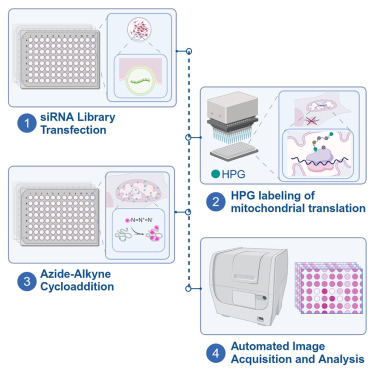
A microscopy-based screen identifies cellular kinases modulating mitochondrial translation

Yousefi R, Cruz-Zaragoza LD, Valpadashi A, Hansohn C, Dahal D, Richter-Dennerlein R, Rizzoli S, Urlaub H, Rehling P, Pacheu-Grau D.
Cell Reportsdoi ↗
Co-first authorCorresponding author

Manipulating mitochondrial gene expression

Dahal D, Cruz-Zaragoza LD, and Rehling P.
Biological Chemistrydoi ↗

Seventy years of peroxisome research: current advances and future perspectives

Carmichael RE, Oeljeklaus S, Cruz-Zaragoza LD, Kumar R, Bolton C, Islinger M, Kunze M, Pata J, Lismont C, Silva BSC, Kors S, Schrader M, Erdmann R.
Histochemistry and Cell Biologydoi ↗
2024

Identification of TMEM126A as OXA1L-interacting protein reveals cotranslational quality control in mitochondria

Poerschke S, Oeljeklaus S, Cruz-Zaragoza LD, Schenzielorz A, Dahal D, Hillen HS, Das H, Kremer LS, Valpadashi A, Breuer M, Sattmann J, Richter-Dennerlein R, Warscheid B, Dennerlein S, Rehling P.
Molecular Celldoi ↗

In organello silencing of mitochondrial gene expression

Koschel M, Cruz-Zaragoza LD.
Methods in Enzymologydoi ↗
2023

A quantitative fluorescence-based approach to study mitochondrial protein import

Jain N, Gomkale R, Bernhard O, Rehling P, Cruz-Zaragoza LD.
EMBO Reportsdoi ↗
Co-corresponding author

The SARS-CoV-2 protein ORF3c is a mitochondrial modulator of innate immunity

Stewart H, Lu Y, O'Keefe S, Valpadashi A, Cruz-Zaragoza LD, Michel HA, Nguyen SK, Carnell GW, Lukhovitskaya N, Milligan R, Adewusi Y, Jungreis I, Lulla V, Matthews DA, High S, Rehling P, Emmott E, Heeney JL, Davidson AD, Firth AE.
iSciencedoi ↗

Determining the targeting specificity of the selective peroxisomal targeting factor Pex9

Yifrach E, Rudowitz M, Cruz-Zaragoza LD, Tirosh A, Gazi Z, Peleg Y, Kunze M, Eisenstein M, Schliebs W, Schuldiner M, Erdmann R, Zalckvar E.
Biological Chemistrydoi ↗

The multifaceted mitochondrial OXA insertase

Homberg B, Rehling P, Cruz-Zaragoza LD.
Trends in Cell Biologydoi ↗

Utilization of nonstop mRNA to assess ribosome-associated nascent polypeptide chains in early topogenesis of peroxisomal proteins

Rudowitz M, Cruz-Zaragoza LD, Girzalsky W, Erdmann R.
Methods in Molecular Biologydoi ↗
2022

Human mtRF1 terminates COX1 translation and its ablation induces mitochondrial ribosome-associated quality control

Nadler F, Lavdovskaia E, Krempler A, Cruz-Zaragoza LD, Dennerlein S, Richter-Dennerlein R.
Nature Communicationsdoi ↗
2021

An in vitro system to silence mitochondrial gene expression

Cruz-Zaragoza LD, Dennerlein S, Linden A, Yousefi R, Lavdovskaia E, Aich A, Falk RR, Gomkale R, Schöndorf T, Bohnsack MT, Richter-Dennerlein R, Urlaub H, Rehling P.
Celldoi ↗
First author

Mapping protein interactions in the active TOM-TIM23 supercomplex

Gomkale R, Linden A, Neumann P, Schendzielorz AB, Stoldt S, Dybkov O, Kilisch M, Schulz C, Cruz-Zaragoza LD, Schwappach B, Ficner R, Jakobs S, Urlaub H, Rehling P.
Nature Communicationsdoi ↗
2020

A piggybacking mechanism enables peroxisomal localization of the glyoxylate cycle enzyme Mdh2 in yeast

Gabay-Maskit S, Cruz-Zaragoza LD, Shai N, Eisenstein M, Bibi C, Cohen N, Hansen T, Yifrach E, Harpaz N, Belostotsky R, Schliebs W, Schuldiner M, Erdmann R, and Zalckvar E.
Journal of Cell Sciencedoi ↗
Co-first author

From TOM to the TIM23 complex – handing over of a precursor

Callegari S, Cruz-Zaragoza LD, and Rehling P.
Biological Chemistrydoi ↗

Defining the substrate spectrum of the TIM22 complex identifies pyruvate carrier subunits as unconventional cargos

Gomkale R, Cruz-Zaragoza LD, Suppanz I, Guiard B, Montoya J, Callegari S, Pacheu-Grau D, Warscheid B, Rehling P.
Current Biologydoi ↗
Co-first author
2017

Saccharomyces cerevisiae cells lacking Pex3 contain membrane vesicles that harbor a subset of peroxisomal membrane proteins

Wróblewska JP, Cruz-Zaragoza LD, Yuan W, Schummer A, Chuartzman SG, de Boer R, Oeljeklaus S, Schuldiner M, Zalckvar E, Warscheid B, Erdmann R, van der Klei IJ.
BBA – Molecular Cell Researchdoi ↗
2016

Pex17p-dependent assembly of Pex14p/Dyn2p-subcomplexes of the peroxisomal protein import machinery

Chan A, Schummer A, Fischer S, Schröter T, Cruz-Zaragoza LD, Bender J, Drepper F, Oeljeklaus S, Kunau W-H, Girzalsky W, Warscheid B, Erdmann R.
European Journal of Cell Biologydoi ↗

Pex9p is a new yeast peroxisomal import receptor for PTS1-containing proteins

Effelsberg D, Cruz-Zaragoza LD, Schliebs W, Erdmann R.
Journal of Cell Sciencedoi ↗
Co-first author

Super-resolution microscopy reveals compartmentalization of peroxisomal membrane proteins

Galiani S, Waithe D, Reglinski K, Cruz-Zaragoza LD, Garcia E, Clausen MP, Schliebs W, Erdmann R, Eggeling C.
Journal of Biological Chemistrydoi ↗
2015

Pharmacologic inhibition of CK2-mediated phosphorylation of B23/NPM in cancer cells selectively modulates genes related to protein synthesis, energetic metabolism, and ribosomal biogenesis

Perera Y, Pedroso S, Borras-Hidalgo O, Vázquez DM, Miranda J, Villareal A, Falcón V, Cruz LD, Farinas HG, Perea SE.
Molecular and Cellular Biochemistrydoi ↗

Role of Pex21p for piggyback import of Gpd1p and Pnc1p into peroxisomes of Saccharomyces cerevisiae

Effelsberg D, Cruz-Zaragoza LD, Tonillo J, Schliebs W, Erdmann R.
Journal of Biological Chemistrydoi ↗
2012

Sequence of the gene coding for the p26 protein from a Cuban strain of Equine Infectious Anemia Virus

Díaz-Miranda M, Vázquez-Blomquist D, Cruz LD, Vasallo C, Campos T, Pérez JE, Paneque D, Duarte CA.
Biotecnología Aplicada
Latest

News

Paper
JULY 2025

Our work on silencing mitochondrial genes is out in Science

A method to silence the translation of specific mitochondrial mRNAs in living human cells, opening new experimental access to mitochondrial gene expression.

APRIL 2025

The Cruz Zaragoza Lab is open

The lab launches at the Département de biologie, Université de Sherbrooke, building a new program on organelle crosstalk and cellular metabolism.

Recruiting
ONGOING

We're recruiting at all levels

Undergraduate, MSc, PhD, and postdoc positions are open for motivated researchers. Reach out by email.

In the media

Press & coverage

Our work on silencing mitochondrial gene expression, covered by research organizations and the press.

Get in touch

Join us or collaborate.

Office · Lab
Office D8-3009 · Lab D8-3056
Address
2500 boul. de l'Université, Sherbrooke (QC), Canada, J1K 2R1
Telephone
819-821-8000 ext. 63658
With support from

Funding & partners

Host institution
Research centre
Federal agency
Initiative